The Cup That Conquered Culture Wasn’t Aluminum. Here’s Why That Should Bother You.

For about three years, the most fought-over object in America was a cup.
Not a phone, not a sneaker but a cup. People lined up before sunrise. Limited drops sold out in minutes and resurfaced online at triple the price. There were fan accounts, color-matching rituals, and a genuine debate, conducted with real heat, over which tumbler was worth carrying .
A drinking vessel became a personality. A status signal. A small daily flag you carried into the world. And almost nobody asked the obvious question: what was the thing actually made of?
Steel got the part it didn’t earn.
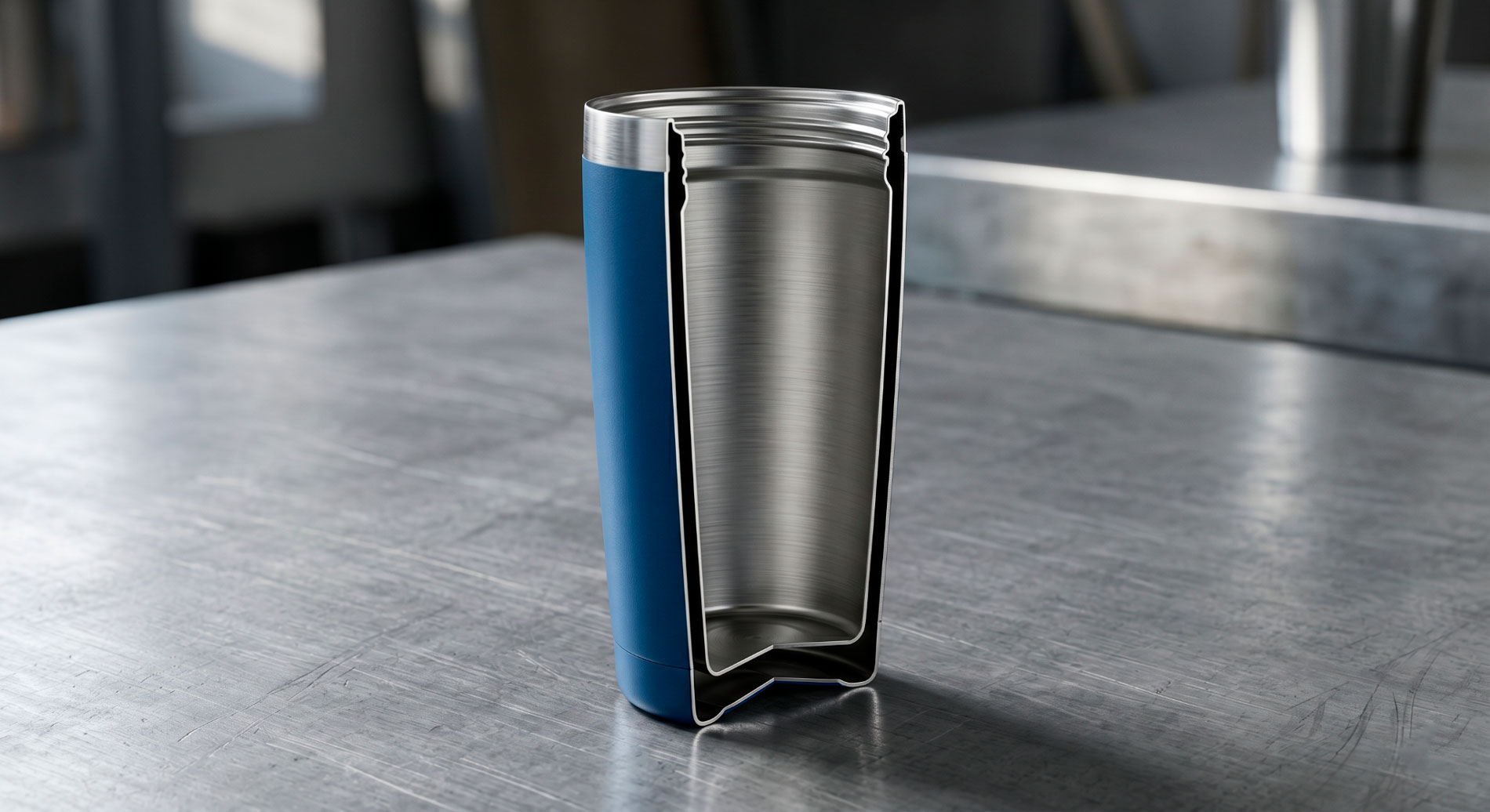
The popular vacuum-insulated tumblers are 18/8 stainless steel. Not aluminum, which should strike you as odd, because when it comes to moving temperature, steel isn’t in aluminum’s league. Aluminum conducts heat at roughly 235 watts per meter-kelvin; stainless steel limps in around 16. By the logic of “keeps your drink cold,” aluminum should have won walking away.
It didn’t, for a reason that turns the whole question inside out: in a tumbler, the metal barely matters.
What keeps your drink cold for twelve hours isn’t the steel. It’s the vacuum, the sealed airless gap between two walls, doing nearly all the work. No air, no path for heat to travel. Pour that same vacuum between two walls of aluminum and the drink stays just as cold, in a lighter, more recyclable cup. The famous cold-for-twelve-hours promise was never a steel achievement. It was a vacuum achievement, and aluminum could have made it word for word.

So if both metals chill equally well, why steel?
Because once temperature drops out of the equation, the decision comes down to something with no thermometer: how the thing feels in your hand. Steel is hard, takes a beating, and lands on the desk with an expensive thunk. A forty-five-dollar object you carry everywhere and quietly show off has to feel like a tank. That heft was never an engineering requirement. It was a character requirement, part of the story the cup told about the person holding it.
And aluminum could have been engineered to deliver it. The metal holds up airplanes and building facades; at the thin gauge of a cup it dents a little easier and finishes differently, but that’s a gap of cost and feel, not possibility. Steel didn’t win because it was the only metal for the job. It won because it was handed the better story, and the weight in your hand was part of the script.
So why does aluminum own the can?
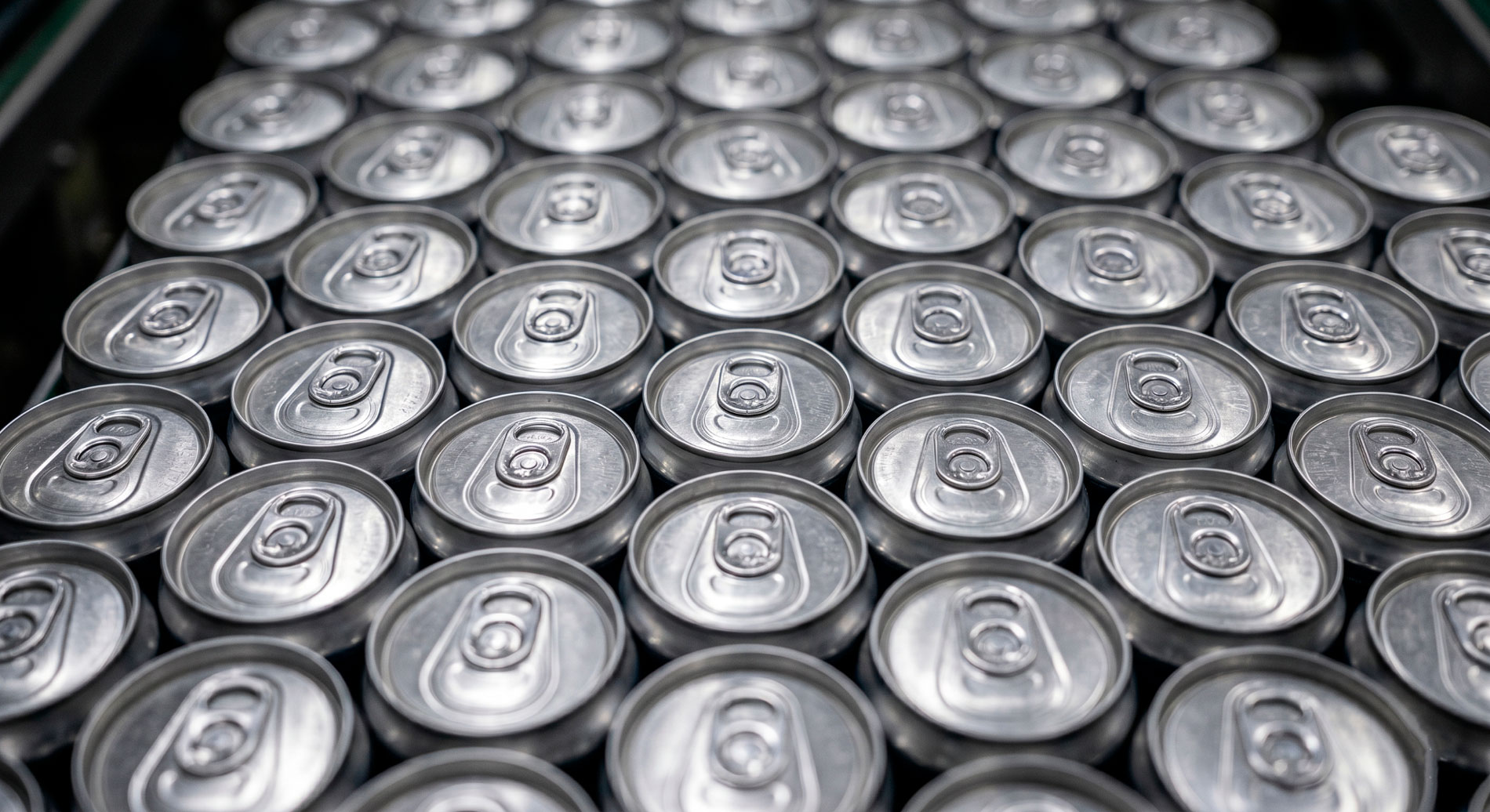
While steel collected fan accounts, aluminum was quietly running the most dominant packaging operation on earth. Roughly 180 billion cans of beer and soda are filled every year. That isn’t a trend. It’s infrastructure.
And aluminum won it the opposite way steel won the cup, not on story but on cold arithmetic. A can has no fan club; nobody collects them. At 180 billion units, the only thing that matters is the math, and aluminum’s math is simply better. It weighs about a third of steel, so it ships cheaper by the trainload. It chills fast and takes print beautifully. It recycles at roughly five percent of the energy needed to make it new, a number steel’s sixty-to-seventy-percent saving can’t approach. And the scrap is valuable enough that the can practically pays its own way home.
Which is why something like seventy-five percent of all the aluminum ever made is still in use today. The can in your hand this morning might carry atoms that were once a 1970s engine block, a 1990s window frame, a can a stranger recycled last spring. Same material, new costume, every time around.
So aluminum took the can on merit alone, and for most of the last century, that was exactly how you won. Build the better material, and the better material wins.
The tumbler is the proof that those days are over.
The lesson worth keeping.
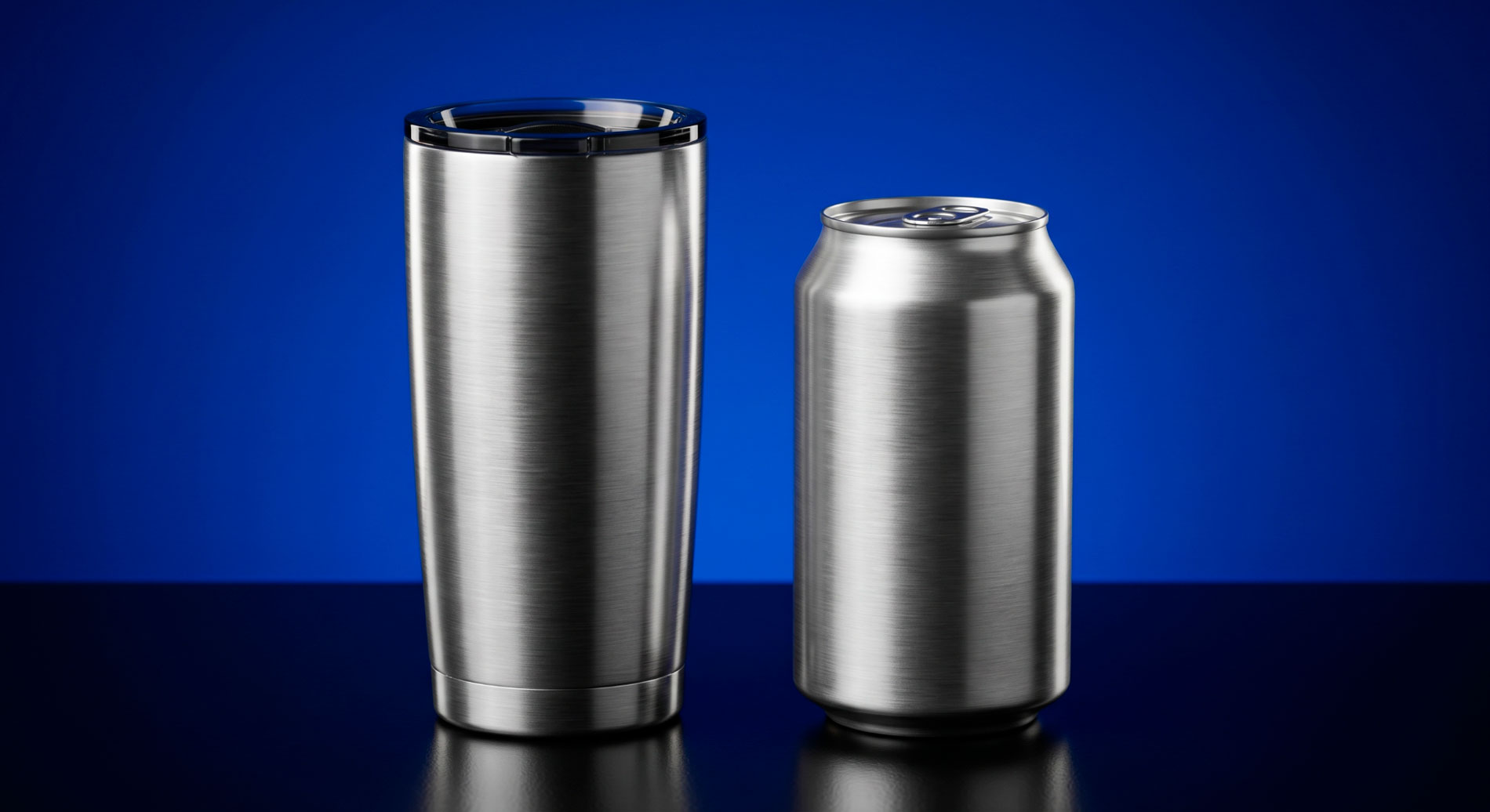
The defining objects of our era are almost never the ones with the best material on paper. They’re the ones where a capable material met a story worth telling. Aluminum had the better case on nearly everything that lasts: lighter, cheaper to move, far more recyclable, even a credible shot at the tumbler itself. It still watched steel walk off with the fame, because someone bothered to wrap steel in a narrative and nobody bothered to do the same for aluminum.
If you work in this metal, that’s the part that should sting. The better material sat there with the better case and let the other guy do the talking.
Being right about the material used to be enough. The can is the monument to that era. The tumbler was lost in our lifetime, on our watch, to the lesser metal, for no reason but the better story.
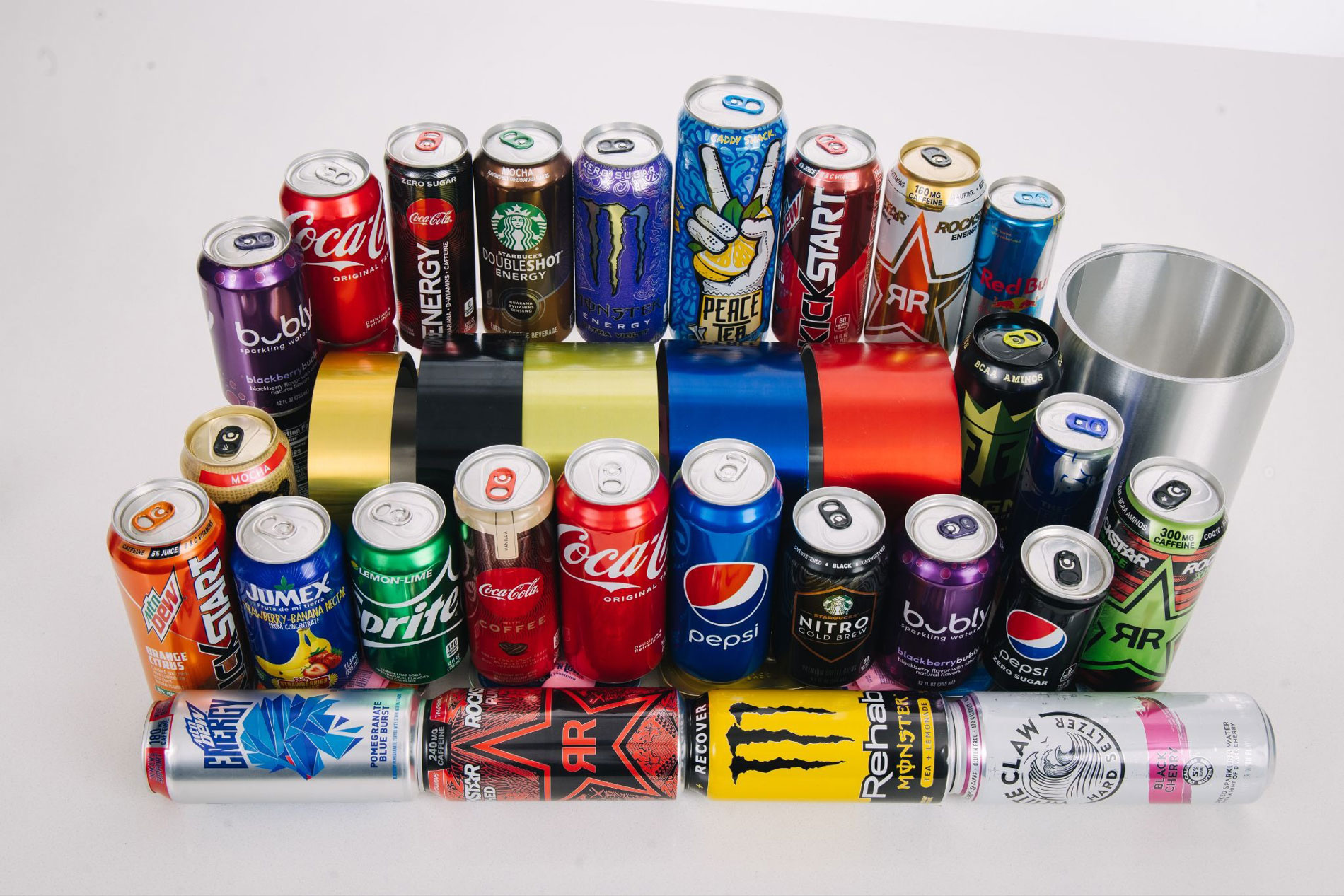
Which brings us to you.
Golden Aluminum doesn’t make tumblers, and we don’t make cans. We make what comes before both, the flat-rolled sheet, the alloy, the finish and color a maker forms into the object someone falls in love with. For more than forty years, in Fort Lupton, Colorado, the thing people end up holding has started on our line.
So here’s the challenge.
The tumbler crown wasn’t stolen. It was left on the table, and steel happened to be standing closer. The aluminum version of that story was never written because nobody in this industry sat down to write it. That isn’t steel being clever. That’s us being quiet.
So look at your own shelf and ask the uncomfortable question: which of your products is the better material, sitting there with the better case, losing anyway because no one has told it right? What’s the next crown you’re about to leave on the table?
You bring the story. We’ll bring the metal good enough to deserve it, and honest enough to outlast the trend.