AI Needs Aluminum. Both Need Power. There Isn’t Enough.
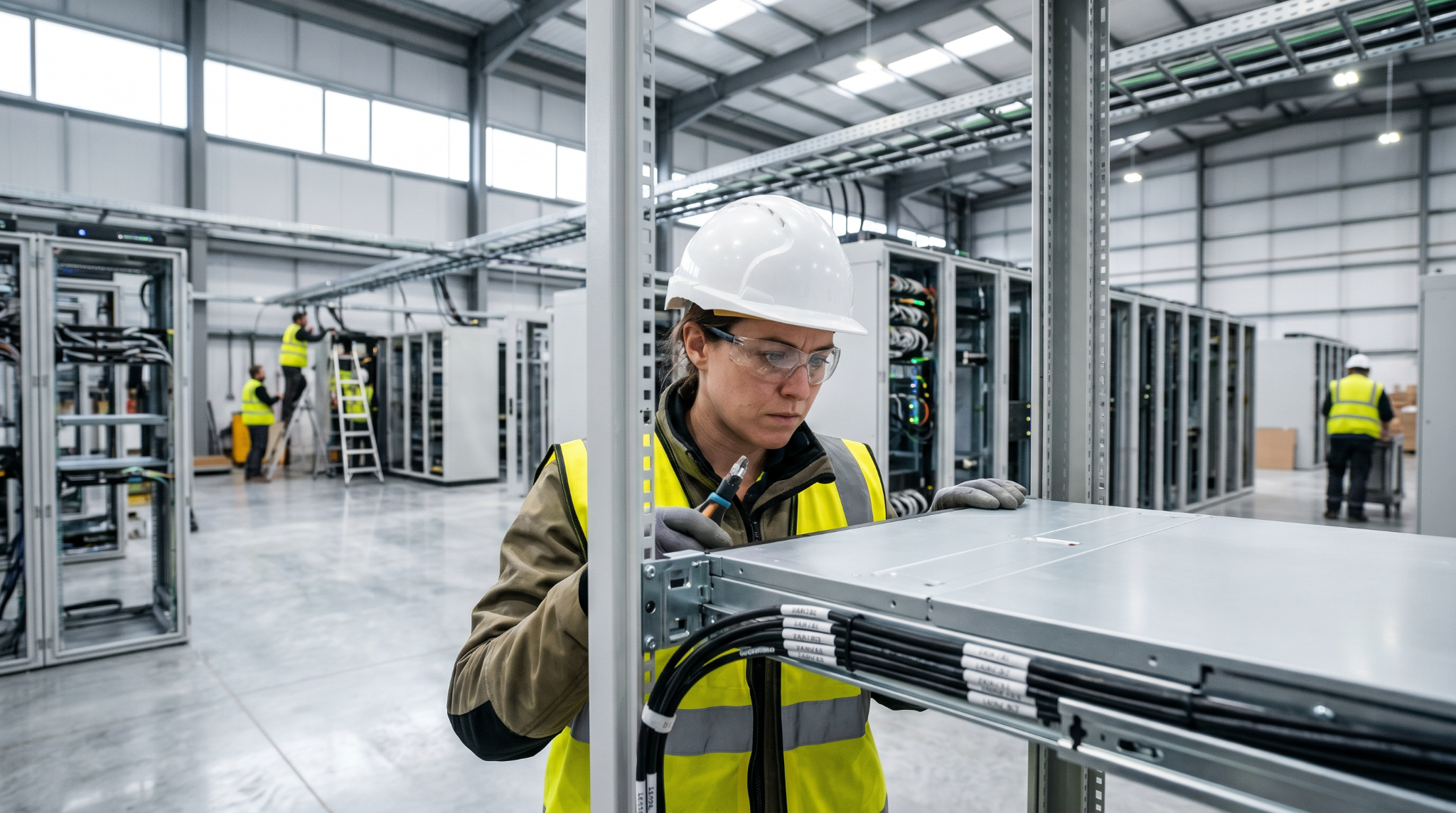
Artificial intelligence is often described as weightless, a thing of models, tokens, and cloud. It is nothing of the sort. The AI boom is one of the most physically demanding construction efforts of the modern era, and it runs, in no small part, on aluminum. The racks that hold the servers, the systems that cool them, the transmission lines that feed them: aluminum, aluminum, aluminum.
And here is the strange part. The same boom that needs so much aluminum is quietly making American aluminum costlier to produce than it has been in decades. The industry building the future is starving the industry that supplies it. To understand why, it helps to look at both ends of the problem at once.
A digital economy made of metal
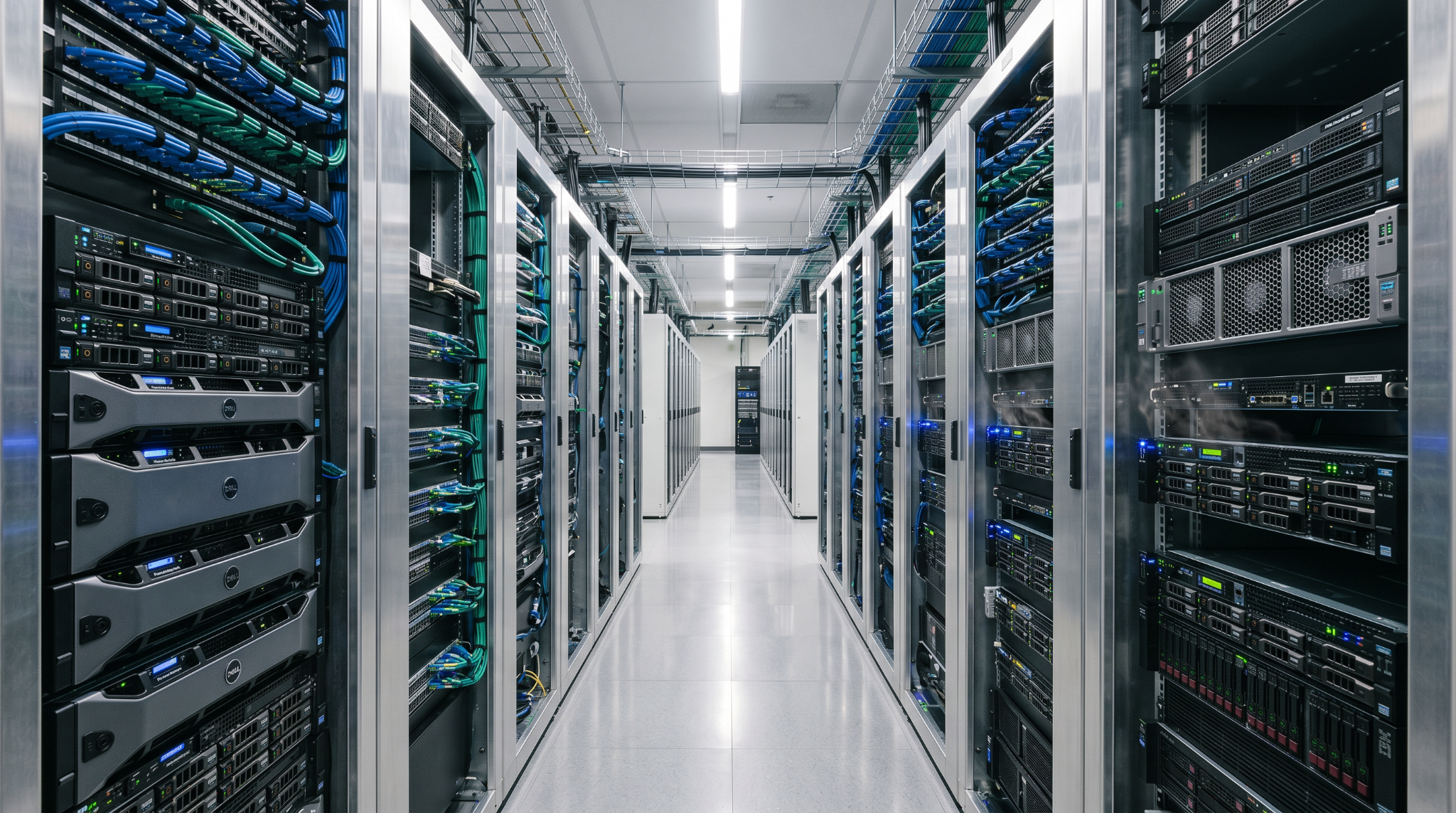
Start with what a data center actually is. Behind the software, it is a warehouse of machinery that consumes electricity and produces heat, and nearly every part of managing that reality involves metal. Industry analyses estimate that each megawatt of data-center capacity embeds roughly 60 to 75 tonnes of minerals, most of it not in the servers, but in the power and cooling systems around them. Aluminum appears throughout: in server racks, in cooling units and heat sinks, and increasingly in the structure of the buildings themselves.
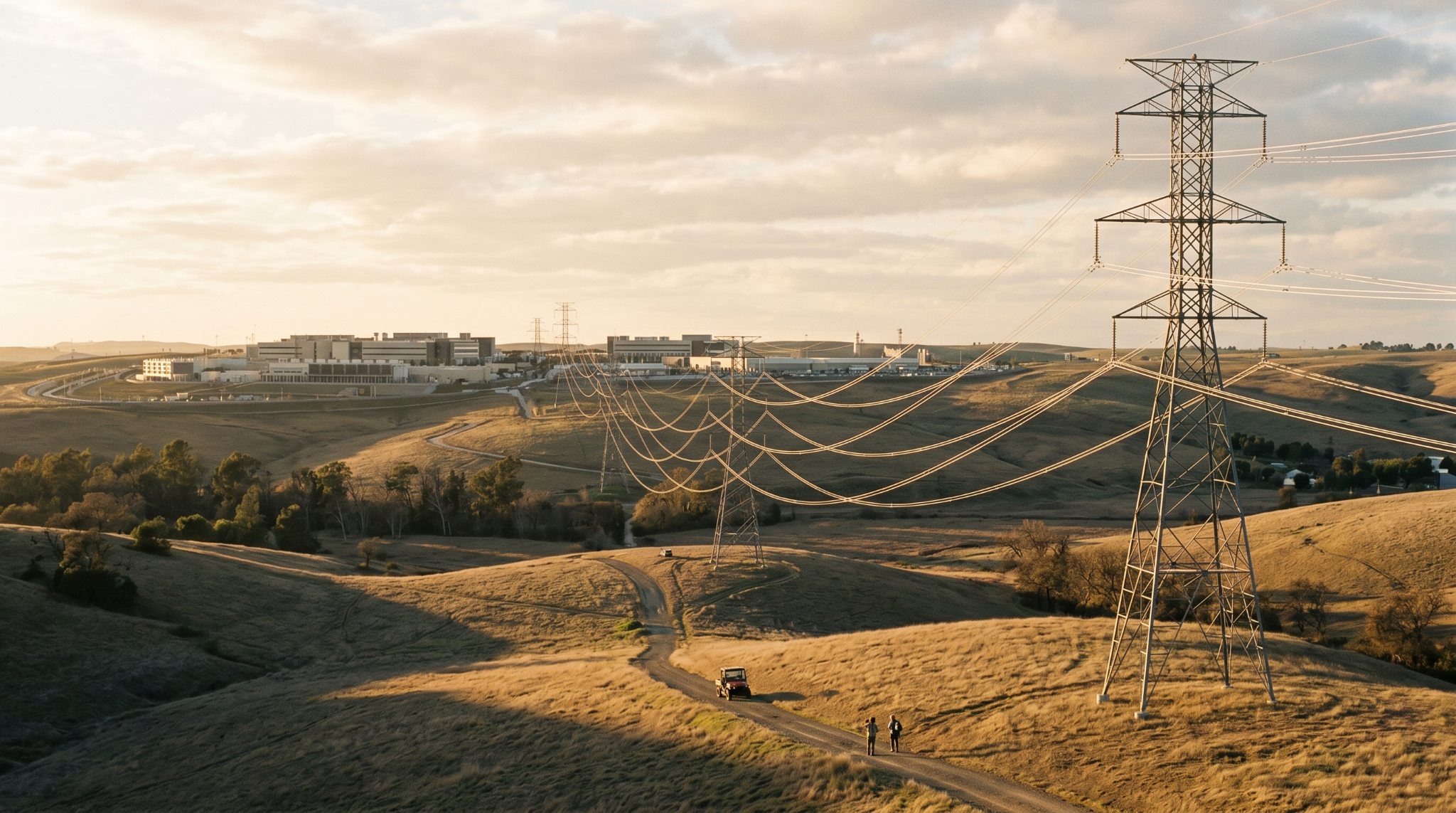
It extends beyond the walls of the facility. To reach a data center, electricity travels across a grid built substantially from aluminum, the standard conductor for high-voltage transmission. As utilities race to expand capacity for AI, they are also expanding demand for the metal that carries power in the first place.
Important note is that copper is arguably the most important metal in AI hardware itself. It is the better conductor in tight spaces, and it tends to win the cold plates and dense power connections at the center of an AI server. But when the question shifts from the chip to the infrastructure, aluminum takes over. Across the wider campus, in the cabling that distributes power building to building, aluminum is gaining share, precisely because it delivers most of the performance at a fraction of the cost and weight.
The smelter’s impossible math
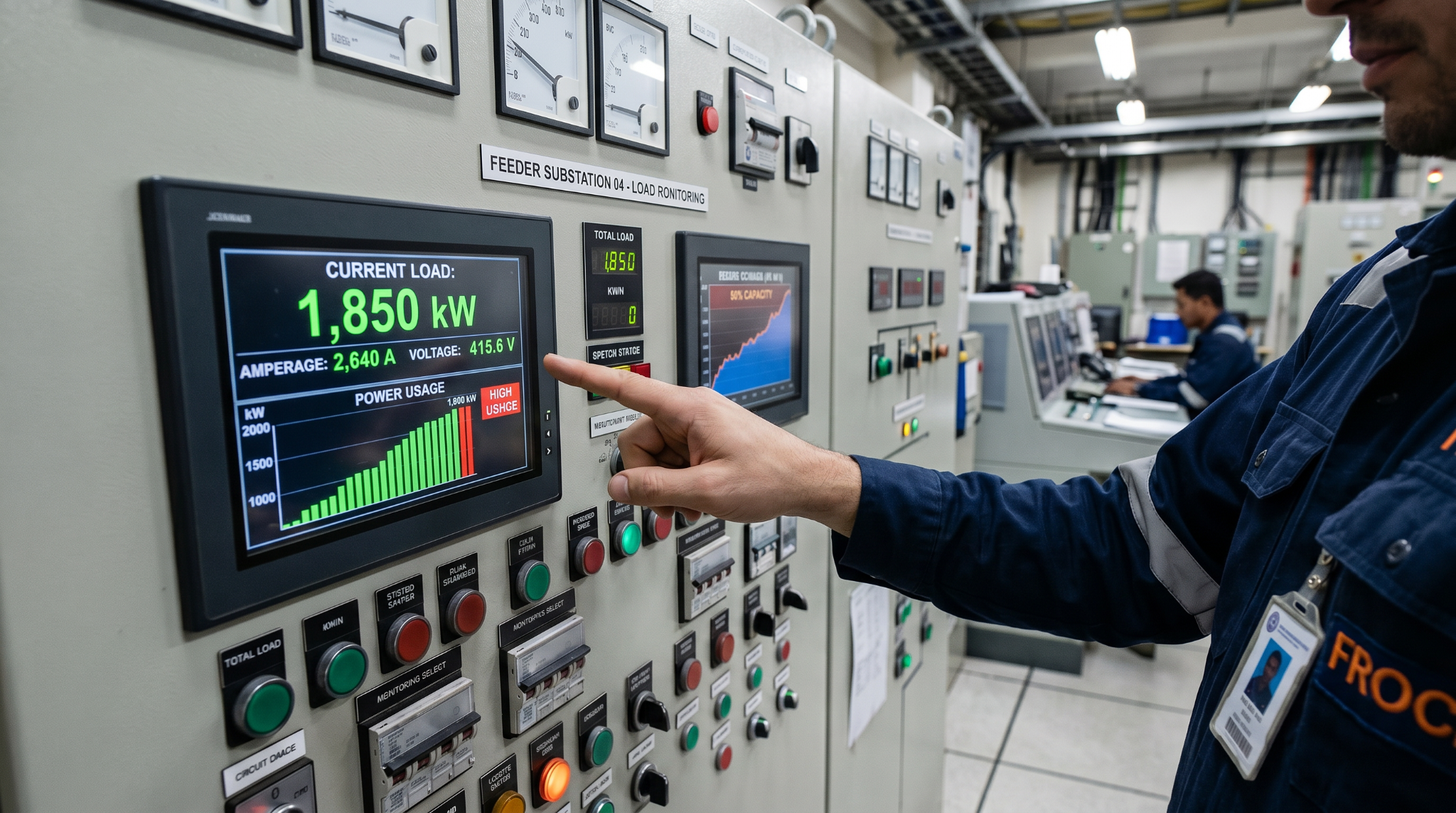
Now turn to the other end. Making primary aluminum, smelting it from ore, is among the most electricity-hungry industrial processes on earth. A single smelter draws roughly 11 terawatt-hours of electricity a year, about what it takes to power a city the size of Boston. For a smelter, electricity is not a cost among many. It is the business.
To operate profitably, American smelters need long-term power priced in the range of thirty to forty dollars per megawatt-hour. Data centers, flush with capital and racing to build, are paying well over one hundred. A smelter simply cannot outbid a hyperscaler for the same electrons, and increasingly it does not try.
The consequences are already visible on the map. Only six primary smelting sites remain in the United States, and just four still operate commercially, together producing around 670,000 tonnes in 2024, under one percent of global output. Even running flat out, American smelters could supply only about a third of the country’s own demand.
The clearest illustration comes from Kentucky, an aluminum smelter that had operated since 1969. In 2022 the company idled it, citing the rising cost of natural gas after Russia’s invasion of Ukraine, and it never restarted. When the site finally changed hands, the buyer was not another metals company but a data-center developer. The value was no longer in making metal. It was in the power infrastructure, worth more feeding servers than a smelter.
Another large smelter has reportedly weighed similar moves.
The machine that eats its own supply
Set the two halves side by side and the paradox comes into focus. Data centers need aluminum to be built, and the electricity demand of the data centers already built is driving up the cost of it. The companies generating the demand are outbidding the suppliers who would meet it.
The pressure is not temporary. Electricity demand in the United States is projected to grow five to ten times faster over the coming decade than it did over the last. And the squeeze runs in both directions. Even as domestic producers struggle to secure power, international supply from Indonesia and China is climbing, and analysts at Goldman Sachs expect aluminum prices to fall roughly fifteen percent by late 2026. Higher costs to produce, lower prices to sell, arriving at the exact moment demand has never looked stronger.
Rebuilding primary aluminum capacity is no quick fix. By the Aluminum Association’s own reckoning, restoring meaningful domestic smelting would take something like five years, five new smelters, and twenty-five billion dollars. Even announced projects have stalled, unable to lock in affordable long-term power. When the scarce input is energy, more smelters are not, by themselves, an answer.
The advantage moves to efficiency
If energy is the binding constraint, then the future of American aluminum belongs to whoever can make it with the least energy.
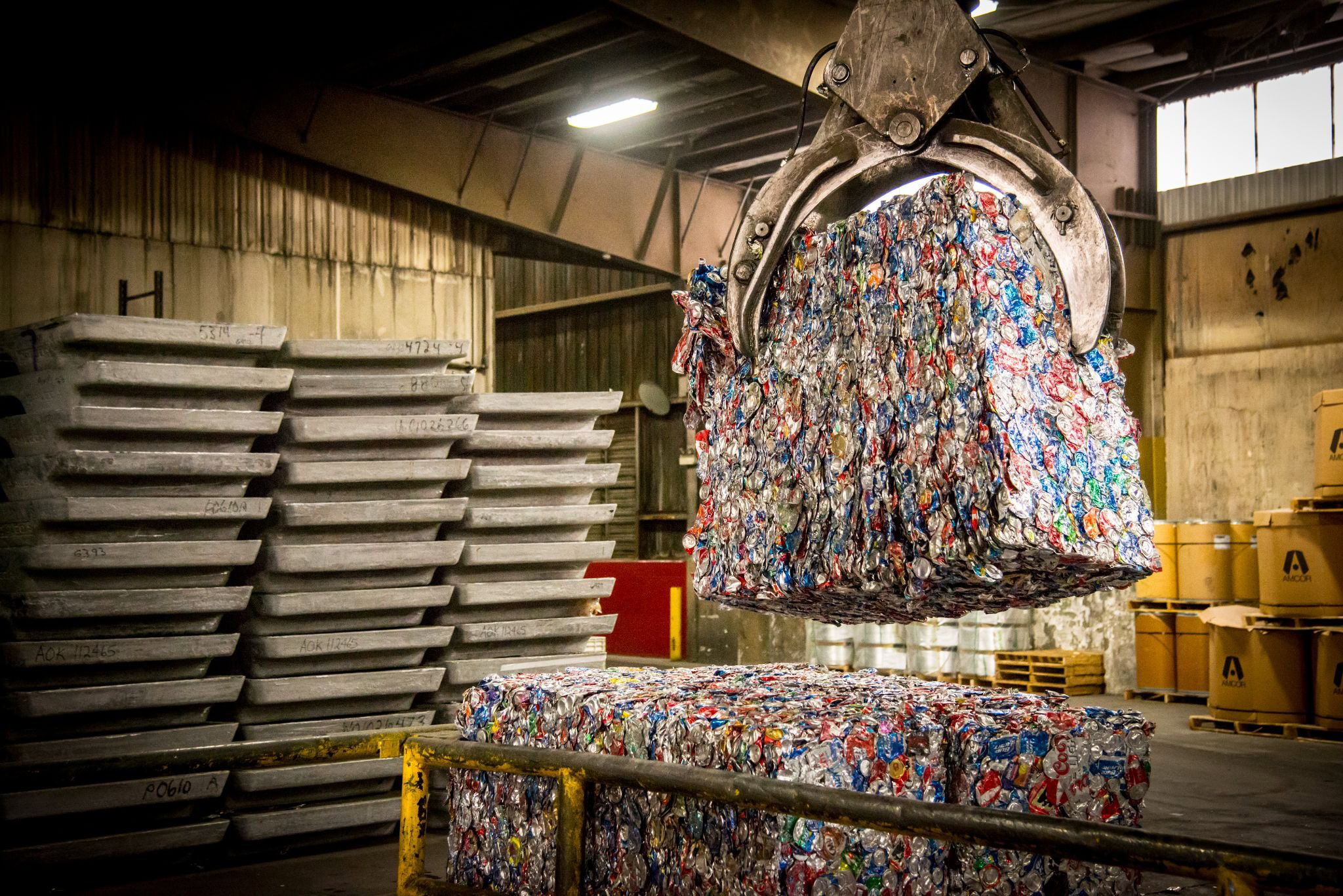
The single most powerful lever is already well understood. Recycling aluminum uses about 95 percent less energy than producing it new from ore, because the hardest, most electricity-intensive work, the smelting, has already been done once and never has to be repeated. Aluminum stores that original energy indefinitely and returns it, through recycling, again and again. In a market where power is the scarce resource, a material that can be remade for a twentieth of the energy is not a sustainability footnote. It is a competitive strategy.
The American industry has, quietly, already moved in this direction. More than 80 percent of U.S. aluminum production today comes from recycled, or secondary, material, up from roughly 20 to 30 percent in the 1980s. The same logic favors producers whose processes are efficient by design: casting and rolling methods that reach finished products with fewer steps and less energy per tonne shipped. As power grows scarcer and dearer, the producers who thrive will not necessarily be the largest. They will be the ones who waste the least.
The weight of a weightless age
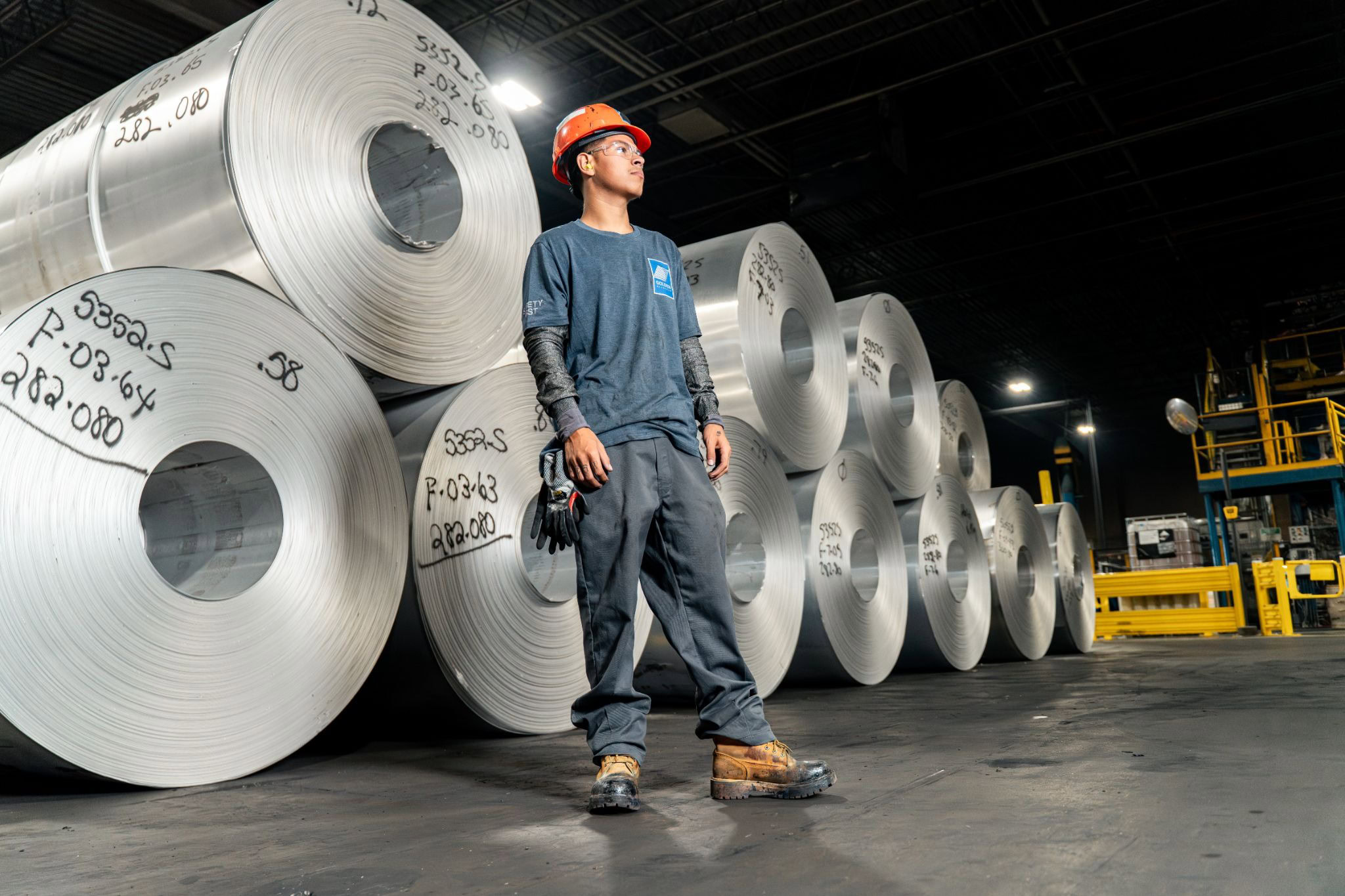
There is a final irony worth sitting with. The most advanced, seemingly immaterial technology of our time has turned out to be one of the most materially demanding undertakings in a generation, and aluminum sits at the center of it.
The contest ahead will not be won by whoever can make the most metal. It will be won by whoever can make it with the least power. That is a harder problem than building another smelter, and a more interesting one. It rewards efficiency over scale, circularity over extraction, and cleverness over brute force, which may be the most fitting description of the age we are building, and the metal we are building it with.
Golden Aluminum is a flat-rolled aluminum producer in Fort Lupton, Colorado, with more than forty years spent making flat-rolled aluminum efficiently and with a high share of recycled content. These are our questions too.